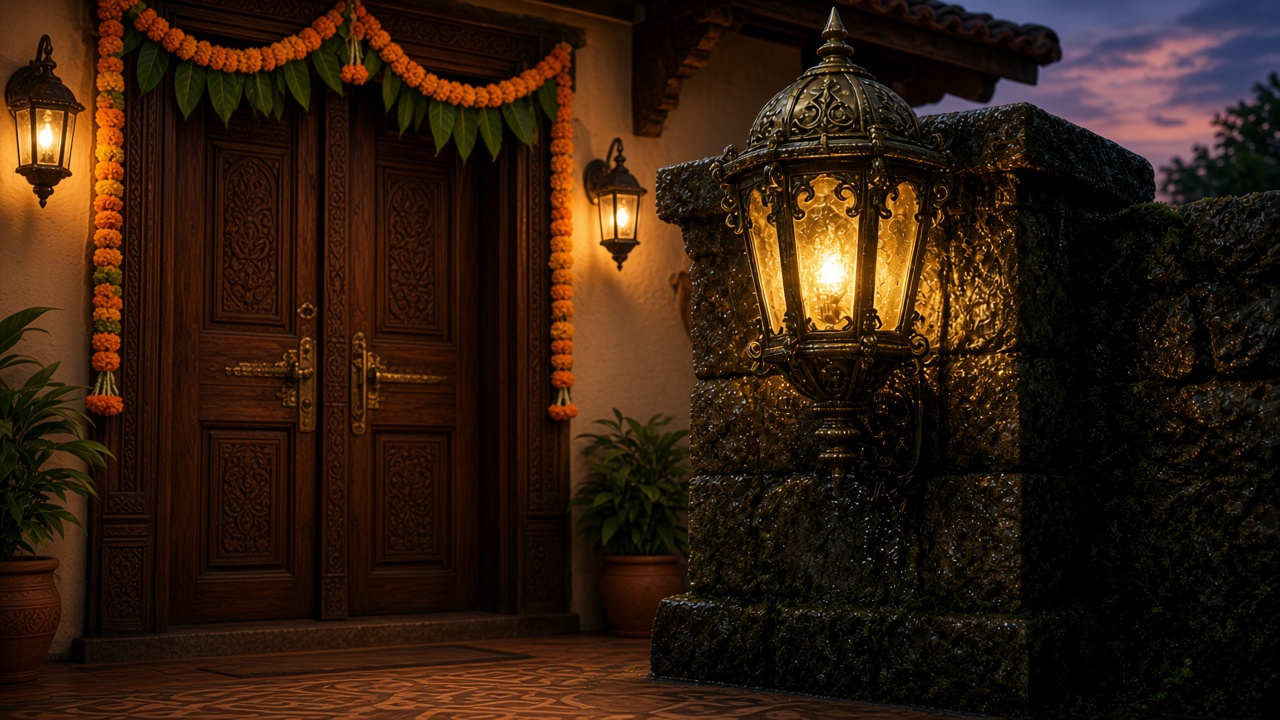
There's a moment every evening, just after the sun has gone down, when your gate light turns on and tells the street what kind of home you live in. You might not notice it. Your neighbours do. The autorickshaw driver who drops guests at your gate does. The courier who makes deliveries after dark does.
I didn't fully understand this until I started going on deliveries years ago — driving to addresses across Uttar Pradesh, watching our lights switch on in the evenings on homes we'd supplied. The difference between a good gate light and a careless one isn't aesthetic — it's how a home feels from the road, every single night.
The first impression happens at night
Most people put enormous thought into how their home looks during the day — the paint colour, the gate design, the driveway finish. But the majority of guests, visitors, and passersby see your home for the first time at night, when the gate light is on and nothing else is. That light is your home's nighttime face.
A flickering CFL in an iron fitting says something about the home behind it. A warm, steady glow from a well-cast antique aluminium lantern says something entirely different. Neither is accidental — both are choices, even if the second one wasn't made consciously.
Colour temperature is the detail no one talks about
2700K. That is the number to remember. That's warm white — the tone of a traditional incandescent bulb, the feeling of evening, the colour that makes a home look genuinely inviting. Anything above 4000K starts to look clinical. At 6500K (cool daylight), your home looks like a petrol station forecourt at night.
The same gate light, fitted with a 2700K LED versus a 6500K LED, looks like two completely different products. Warm light is welcoming. Cool light is efficient but cold. For a home entrance, warmth wins every time.
This is the single most impactful detail most homeowners overlook — and the cheapest thing to get right. The right colour temperature costs nothing extra. The wrong one makes an expensive light look cheap.
The gate and the light should be in conversation
An ornate wrought-iron gate with a sleek brushed-steel light creates visual noise. A simple painted steel gate with an antique gold cast aluminium lantern creates harmony. Neither pairing is objectively wrong — but the choice should be deliberate, not accidental.
We always ask: what's the gate style? What material are the pillars? What's the exterior wall colour? These questions tell us more than any catalogue preference ever could. A light that looks stunning in isolation can look completely wrong on a specific home — and vice versa.
What changes when you get it right
Objectively: your property looks better. Gate lights have one of the highest return-on-investment ratios of any exterior improvement, because they're visible every single evening for the life of the house. A good gate light outlasts the paint, the garden, the car in the driveway.
Subjectively: the feeling of arriving home changes. That amber glow through the dark as you pull into the gate — it's a small thing. But it's one of those small things that turns a house into a home.
"We've been making that moment possible since 1990. Thirty-five years of evenings, lit up across homes and hotels and housing colonies across India. That's what we make."
If you're unsure where to start, send us a photo of your gate and your pillars. We'll tell you what works and why — no catalogue browsing required.