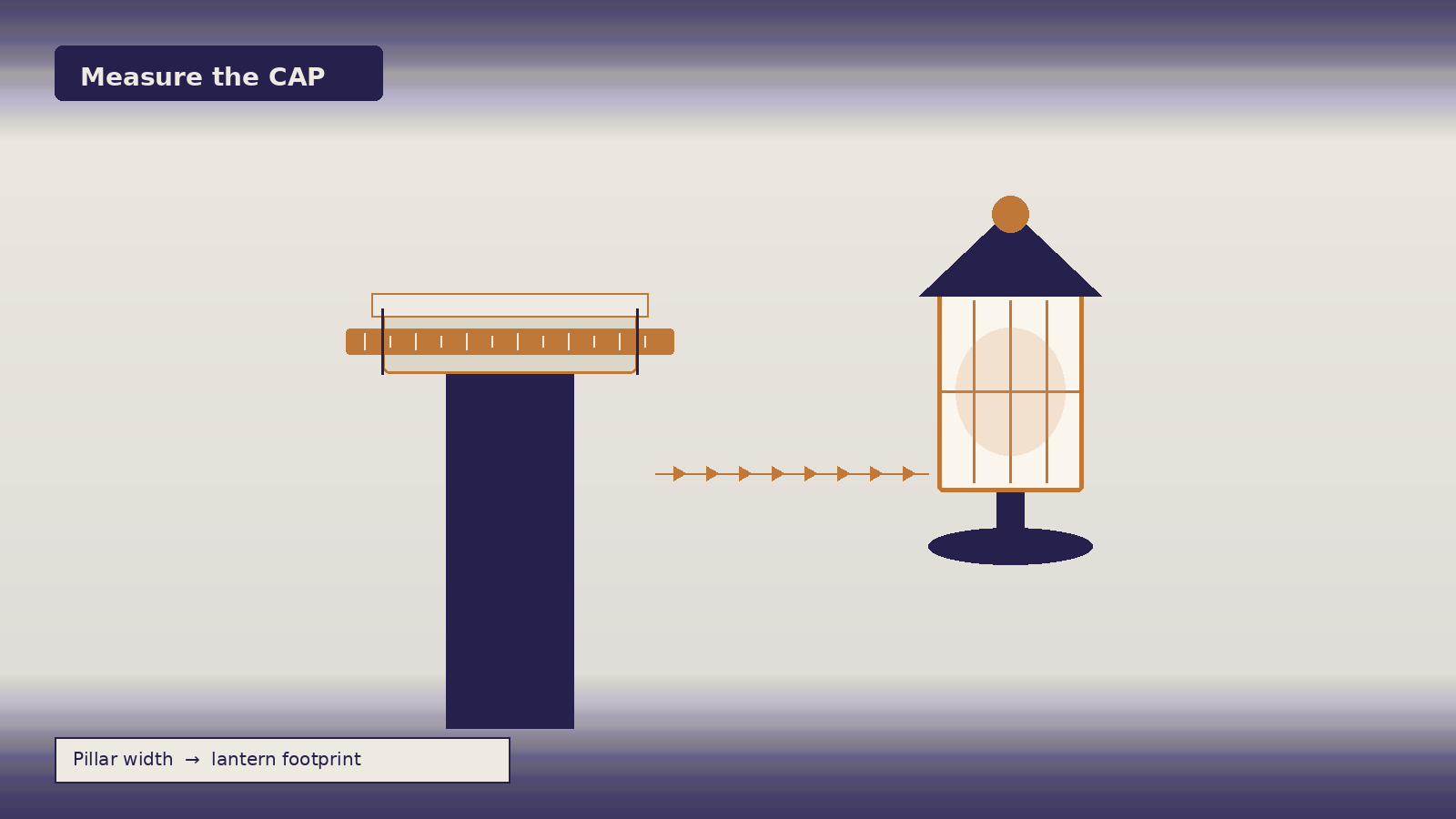
The most expensive gate lantern is the one that looks right in the drawing and wrong on the pillar. Architects do not need another mood board from us. They need a measuring method: tape on the cap, width in inches, footprint that matches the metal that will sit there. This note is that method — not the general buyer brief in how to choose a gate light, and not the one-pager pattern in what I send for a spec sheet. Those still matter. This is the tape-to-quote path before a remake leaves Aligarh.
Key facts (TL;DR)
- Measure the CAP — the flat top the lantern sits on — not the shaft and not the Instagram crop.
- Rule of thumb: a six-inch-wide pillar needs at least a 6×6 or 6×8 light; a foot-wide pillar with a four-inch fitting looks like an afterthought.
- Indian sites: many farmhouse caps are about 12–18 inches; Gurugram (and many city) pillars are often narrower than the photo suggests; some contractor-adjusted columns are thinner still.
- Catalogue line: height × width in inches + the millimetre line already printed on product pages — confirm against the measured cap.
- Quote path: tape photo + cap width → Padma_Catalogue_2026.pdf / catalog.html → WhatsApp +91 70176 62533.
Cap vs shaft — what the lantern actually sits on
A post-top lantern sits on the cap: the finished flat (or slightly weathered) top of the pillar. The shaft is what photographs tall from the road. We size against the cap width — and depth if the cap is rectangular — not against how imposing the column looks in a phone crop.
That is the first correction we make on WhatsApp almost every week. Someone sends a beautiful elevation. The lantern they circled is elegant. The cap they did not measure is six inches. The elegant lantern is fourteen inches wide. Result: a hat on a pencil, or a remake. Detail on matching the pillar in the buyer guide: gate light sizing.
Tape method — five minutes on site
- Stand at the pillar, not at the gate leaf. You are measuring the seat for the lantern, not the opening width.
- Put the tape across the CAP — left edge to right edge of the finished top. Note width in inches. If the cap is rectangular, note depth too.
- Photograph the tape in the frame. One clear phone photo beats three paragraphs of “about a foot.”
- If there are two pillars, measure both. Matching lights need matching seats; asymmetry at the entrance reads as unfinished.
- Write height × width from the catalogue against that number — product pages already carry inches and a millimetre line. Do not invent a third unit system on the drawing.
That is enough for a sized reply. You do not need a full BIM export to ask whether a gate head will sit. You need a number and a picture.
Common Indian pillar widths (workshop pattern, not a survey)
Patterns we see from the works — useful as a check against your site measure, not a substitute for it:
- City / Gurugram-style pillars — often narrower than the elevation crop suggests. Treat the photo as suspect until the tape speaks.
- Many Indian farmhouse caps — about 12–18 inches at the top; some contractor-adjusted columns come out thinner after a site “tweak.”
- Six-inch seats — need at least a 6×6 or 6×8 light. Smaller than that disappears.
- Foot-wide seats with four-inch fittings — look like an afterthought, however pretty the fitting is in isolation.
Farmhouse jobs and driveway briefs expand this further: farmhouse gate lighting. Exterior category choice (gate vs wall vs hanging vs pole) is a different question: exterior lighting for an Indian home.
How lantern footprint relates to the cap
Think of the lantern’s listed width as the footprint you are placing on the seat. The fitting should read as belonging to the pillar — not floating like a birdbath ornament, not overhanging so far the door and glass catch every monsoon sheet.
We list height × width in inches on the site, with millimetres alongside. Use those numbers against your tape. Multi-size gate families in the catalogue exist so one look can step across several caps — but the step still starts from a measured seat, not from a preferred render. Browse gate lights or the full catalogue (~201 models) once you have the inches.
Body and finish for the drawing: die-cast aluminium, powder coat (antique wipe when that is the look), B22 as standard, empty or glass/LED as quoted, bulb not included unless the quote says so. We do not publish IP ratings — WhatsApp if a consultant needs an honest body/finish line rather than a number we have not lab-tested. Spec email pattern: architect spec sheet. Finish climate honesty: powder coat and antique.
What to send on WhatsApp for a sized quote
Trade desk: +91 70176 62533 · email padmaenterprises55@gmail.com.
- Cap width (and depth if rectangular) in inches — plus the tape photo.
- Preferred look or codes from Padma_Catalogue_2026.pdf / catalog.html.
- Finish (antique, matte black, grey, etc.), empty vs glass/LED, quantity (pairs for two pillars), destination city.
I type the reply against those numbers and codes and attach a photo of the actual piece, not a render. Commercial terms, GST and works address: About. Freight: shipping. Trade lots from 10 pieces; 1–5 at retail list; about four days for ~10 catalogue pieces; 1–2 weeks for larger lots; INR ex-works Aligarh; GST and freight extra. Custom lantern sizes still need a physical sample and 50+ pieces — wrong first move when a catalogue size already fits the cap. Die-cast poles we make run 2 ft to 15 ft when the brief is driveway height rather than a pillar seat.
FAQ
Do I measure the shaft or the cap?
The cap — width (and depth if rectangular). Tape in the photo helps. Not the Instagram crop.
Six-inch pillar — what size light?
At least a 6×6 or 6×8. A foot-wide pillar with a four-inch fitting looks like an afterthought. Confirm height × width on the product page / PDF.
Are farmhouse and Gurugram pillars the same?
Often not. Many farmhouse caps are about 12–18 inches; city / Gurugram pillars are often narrower than they look. Measure the site.
What goes in the WhatsApp for a sized quote?
Cap measure + tape photo, look or codes, finish, empty vs glass/LED, quantity, city. +91 70176 62533. Spec pattern: architect spec.
Do you publish IP ratings?
No. Ask on WhatsApp if a drawing needs an honest body and finish line — we will not invent a lab number.
“Size the lantern for the pillar seat you measured — not for the screenshot that made you buy the plot.”