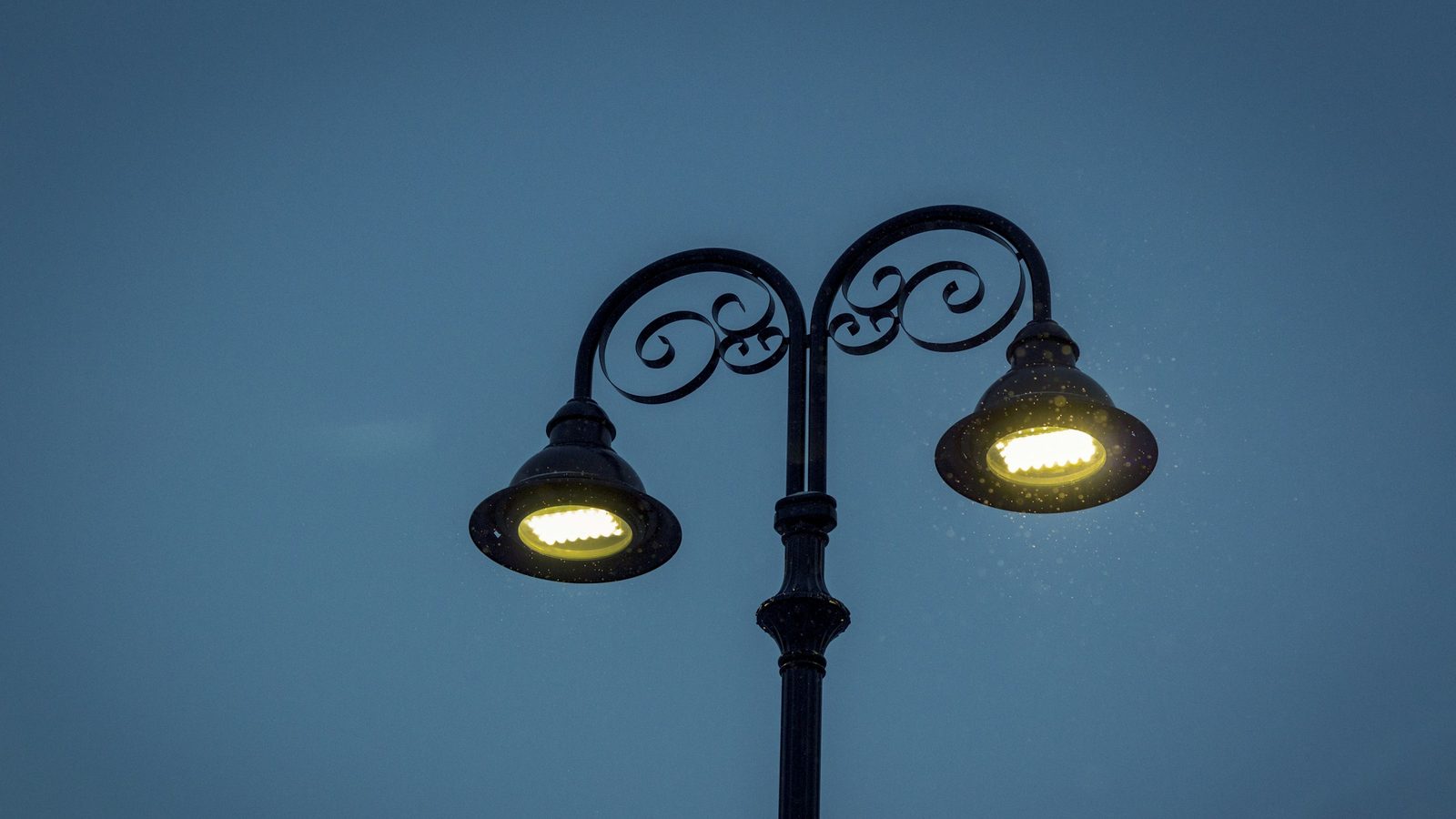
A cast pole with two lanterns lights a park walk or a society lawn from one foundation and one cable point. Padma makes these twin-head posts in Aligarh in two arm styles, and PPL 5002A carries three heads. The codes below are grouped by how the arms hold the lanterns, and the site checks after them decide which one fits. Single-head poles and the full range sit on the pole lanterns page. Each size is the product-page figure in inches, height first and width second.
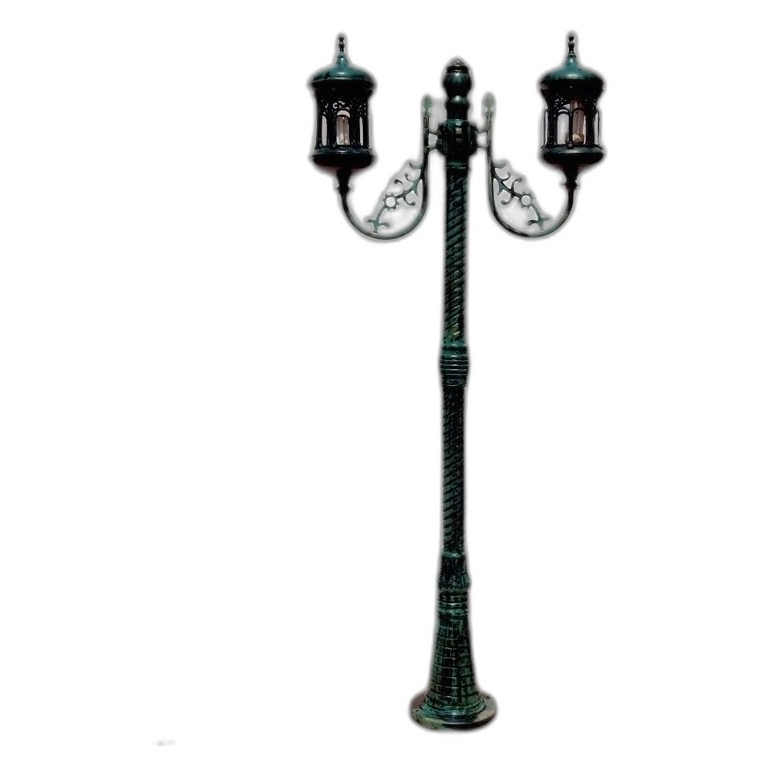
Lanterns standing on the arms
On an upright post each lantern sits on top of its arm, with the glass above the scrollwork. The light starts higher than the arm, and the head reads as a small gate lantern lifted into the air. PPL 5001A is the tallest of the three upright codes here at 80×11, about 2 m to the top, listed in Green with a finial rising between the two heads. PPL 5002A adds a third lantern raised in the centre, at 70×10 in Matte Black, and suits a forecourt where one post stands on its own.
PPL 5005A is the short one. It stands 30 inches on a scalloped base, so its two Matte Black heads sit below waist height beside a lawn edge or a clubhouse step. Treat it as a path marker. A drive needs a taller post.
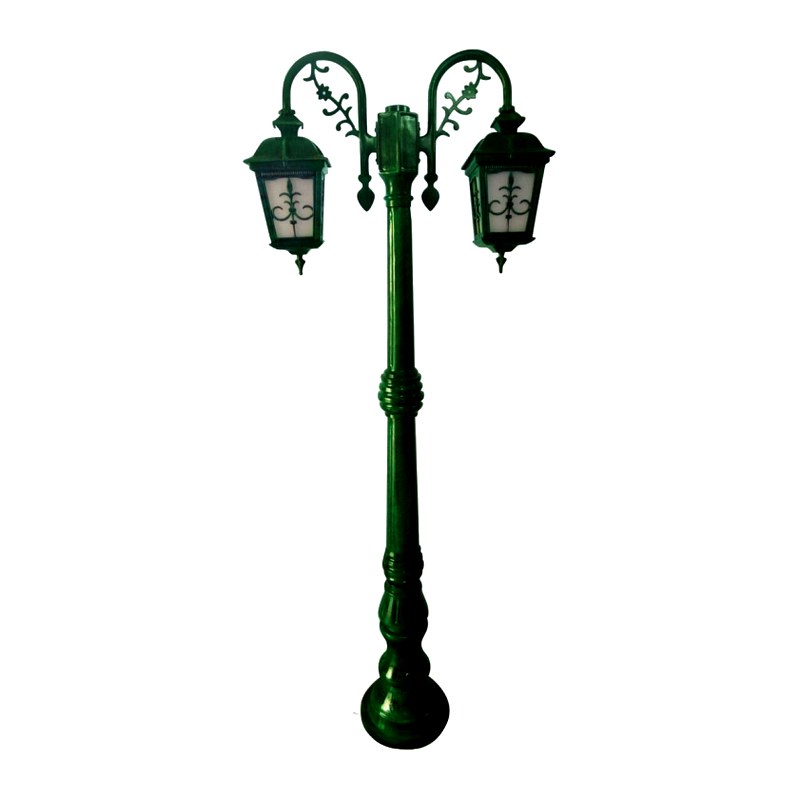
Lanterns hanging below the arms
On a hanging post each lantern drops from the end of its arm, so the top of the arm becomes the highest point and the glass sits a little lower. From a park bench you look up into the underside of each head, and frosted glass keeps the bare lamp out of sight. The panel choice is covered in clear or frosted glass. PPL 5009 has swan-neck arms with scroll infill, 72×12 in Green. PPL 5013 is a 48×8 Green post with a scrolled crossbar and white bowl-shaped heads, low enough for an internal garden path.
Two antique posts follow the crossbar pattern. PPL 5008 is the largest twin in the range at 108×14, roughly 2.7 m, with two lanterns hung from a scroll bar near the top. PPL 5010B uses the same idea at 64×8. PPL 5025, in Matte Black, curves one arm to each side and hangs the lanterns at slightly different heights, which gives a less formal outline. It comes in 72×8 and 60×8.
Five site checks before you pick a code
-
Measure the path where the post will stand and the clear space on either side. The dimension drawing on each product page shows how far the arms reach, and that reach is what you compare with the space beside the path. On a 1.2 m walk lined with hedges, a 14-inch spread can put one head over the hedge and the other over the walking line, and the arm that overhangs the path gets knocked.
-
Write down the tallest thing the post will stand beside, whether that is a boundary wall or a row of trees. The height bands for garden walks and drives are worked out in garden path or driveway pole height. As a rough reading of this range, PPL 5013 and PPL 5010B are path heights, and the 72-inch and 80-inch posts belong on an internal road or a long drive.
-
Mark centres on the ground at 6 to 10 m. We have no measured basis for widening that gap because a post carries two heads, so the guide to driveway pole spacing still applies. A curved park walk usually takes a post on alternate banks.
-
Decide which way the arms face. Turned along the path, both heads light the walking surface and neither one hangs over the planting. Turned across a wide lawn path, the pair lights both verges. The electrician should set every post in a run the same way, because an arm turned a few degrees reads clearly in a row of ten.
-
Count the holders as well as the posts. Each lantern takes a B22 lamp as standard, and the quote states any other holder, so twelve twin posts mean twenty-four lamps on the material list, and twelve PPL 5002A posts mean thirty-six. Lamps are supplied only when the quote lists them. Dealers deciding between bare castings and glazed heads can weigh both in the empty housing guide.
Choosing the finish for a park
Green appears on three pole codes in the range, PPL 5001A, 5009 and 5013. By day it sits back against lawns and tree cover. Matte black shows a sharper silhouette against a pale building or an evening sky, and the antique posts carry a bronze-toned wipe that sits well beside sandstone or brick. If a site needs green on a code listed in another finish, ask on WhatsApp before the quote is fixed.
A park with twenty posts reads as one installation only when every post comes from the same coating run. Order the full count together, and add any gate lanterns or wall lights in the matching finish to that order. If the gate pillars still need lanterns, see black or antique gold for gate pillars before fixing the park finish.
Placing the order
Most of these product pages list a mounting bracket and a lantern head or lamp as separate add-on lines next to the size. Read those lines before you total a quote, and name in the message the add-ons each post needs.
Trade rates start at 10 pieces, and 100 pieces or more is quoted as a project. The order bag on this site adds packing at ₹40 per piece, then 18% GST on the order amount plus packing for orders delivered in India. Transport is quoted separately before dispatch, and the shipping page has the courier times. A society park order sent on WhatsApp to +91 70176 62533 should name the code, finish, post count, path width and city. Every twin and three-head post appears with photos in the 2026 catalogue PDF, and a society committee can go through it before signing off the order.