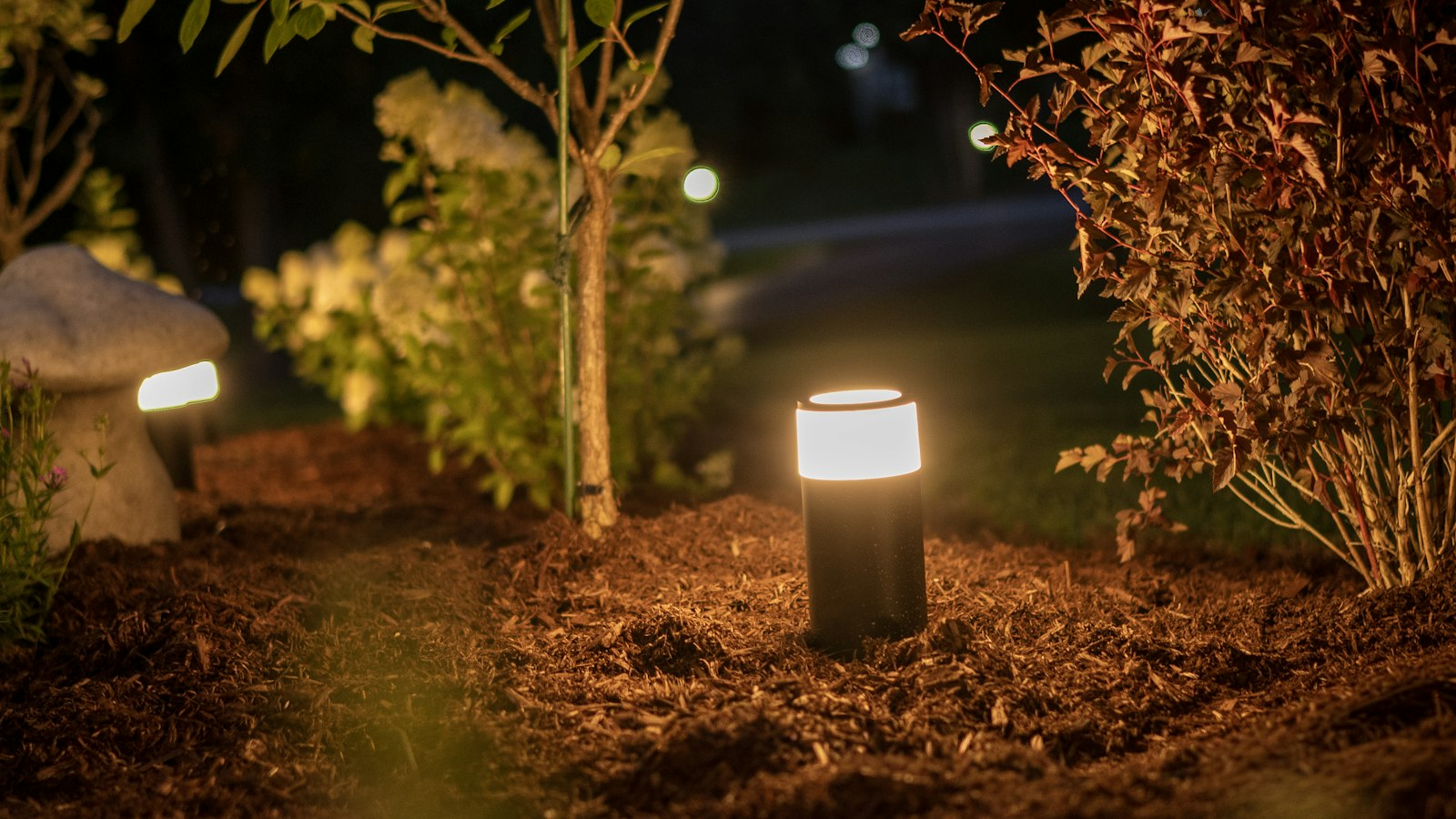
A driveway that looks evenly lit on a night photo and patchy on site usually failed at one decision: centre-to-centre spacing. Gate lanterns get sized to a pillar cap; hanging porches get a drop. Driveway poles need a run length, a height band, and an honest gap between fittings. This note is how architects and trade specify driveway pole light spacing India for cast-aluminium poles from Aligarh — not a second general buyer guide (that stays on outdoor pole lanterns), and not a lux chart we have not measured.
Key facts
- Job: even pools of light along a residential, villa or farmhouse drive — not a hotel boulevard glare strip and not a single lonely post at the gate.
- Spacing pattern: many Indian home and farmhouse runs land around 6–10 m centre-to-centre for ~2–3 m poles; tighter paths and tree lines often 4–6 m. Divide the measured run — do not copy a render.
- Height: poles we make run about 2 ft to 15 ft depending on the brief; driveway heads usually sit below tree canopies and clear car mirrors without blasting bedrooms.
- Body: die-cast aluminium, powder coat (antique wipe when that is the look), B22 as standard; empty or glass+LED as quoted — no invented IP or lux ratings.
- Quote path: run length + preferred gap or pole count → pole-lanterns.html / Padma_Catalogue_2026.pdf → WhatsApp +91 70176 62533.
Measure the run before you pick a look
Outdoor pole lantern spacing for driveway work starts with a tape on the ground, not with a favourite catalogue page. Architects should write three numbers before anyone argues about antique vs matte black:
- Drive length from gate throat (or first usable planting line) to the house drop-off or garage mouth — the lit run, not the plot boundary fairy-tale.
- Drive width and sides — one side only, both sides, or staggered opposite banks. Staggered rows change how gaps read at night.
- Obstacles — mature trees, compound-wall setback, transformer poles, bedroom windows that hate glare, and where cars actually park.
Once those exist, divide the length by a target gap to get a pole count (or the reverse: pick a count that keeps gaps honest). A 40 m farmhouse approach at 8 m centres is five poles on one side — plus the gate story, which is a different fitting. Gate caps stay on pillar size to lantern size; farmhouse context is in farmhouse gate lighting.
Centre-to-centre gaps that usually work on Indian sites
These are workshop and site patterns for decorative cast-aluminium driveway and path poles — not a photometric standard and not a substitute for a lighting consultant on a hotel or mall brief:
- Short villa approach (about 15–25 m): often 4–6 m centres, or two to four poles total so the gate and the porch still own the story.
- Typical residential / farmhouse drive (about 25–60 m): often 6–10 m centres on ~2–3 m poles when you want continuous pools without a continuous glare ribbon.
- Tree-lined or curved paths: tighten toward 4–6 m so trunks do not eat the next pool; stagger if both banks are planted.
- Wide twin-lane farmhouse entries: consider both sides or a staggered pair — one side alone can leave the return lane dark.
If the brief is a society internal road or a hospitality boulevard, say so on WhatsApp. Those jobs need a different conversation about mounting height, wiring trenches and batch quantities — closer to our builders and societies note than to a single villa drive.
Pole height vs trees, cars and bedroom windows
Spacing and height travel together. A tall thin pole spaced wide can still leave dark puddles; a short bollard-like head spaced tight can feel like airport taxi lights. On Indian residential drives we usually want the lantern head:
- Above bumper and mirror height so parked cars do not hide the glass.
- Below dense tree canopies that would otherwise turn every fitting into a glowing leaf pile.
- Aimed so the glass does not stare into ground-floor bedrooms across a narrow setback.
Die-cast poles from the works cover roughly 2 ft to 15 ft overall depending on the line item. Pick height for the drive geometry; keep the finish family related to the gate lantern without forcing the same overall height. Category browse: pole lanterns and the full catalogue (~201 models).
Body honesty stays the same as every outdoor decorative line we cast: aluminium that does not rust like iron, powder coat (antique wipe when that is the look), B22 as standard, bulb not included unless the quote says so. We do not publish IP ratings or lux charts we have not lab-tested — ask on WhatsApp for an honest body/finish line. Material context: aluminium vs iron. Climate/finish: powder coat and antique.
One side, both sides, or staggered — and batch finish
Trade and architects should decide the layout grammar before the packing list:
- One side — common on narrow approaches; cheaper trench and cleaner planting bed on the other bank.
- Both sides aligned — formal villa look; needs matching centres so the night view does not drift.
- Staggered opposite — useful on curves and tree lines; gaps can read closer than the true centre-to-centre on one bank alone.
Batch finish matters when a drive takes six, eight or twelve matching poles. Antique wipe and powder coat read as one field only when the lot leaves Aligarh together. Split reorders weeks later can drift slightly — say so up front if you need a single visual ribbon from gate to porch. Empty housing vs glass+LED packing is the same wholesale choice as elsewhere — empty housing vs glass+LED.
What to send on WhatsApp for a driveway pole quote
Trade desk: +91 70176 62533 · email padmaenterprises55@gmail.com.
- Driveway length and width; one side / both / staggered; photos of the run help.
- Preferred centre-to-centre gap or target pole count, plus pole height band.
- Look or codes from Padma_Catalogue_2026.pdf / pole-lanterns.html / catalog.html.
- Finish, empty vs glass/LED, quantity, destination city; note trees, windows and compound setback.
I type the reply against those numbers and codes and attach a photo of the actual piece, not a render. Commercial terms: trade lots from 10 pieces; 1–5 at retail list; INR ex-works Aligarh; GST and freight extra; 50% advance; about four days for ~10 catalogue pieces; 1–2 weeks for larger lots; 12-month manufacturing warranty. Works Aligarh 202001 · GSTIN 09AAQPV4894B1Z0. Detail: About, shipping, returns. Spec email pattern: architect spec sheet.
FAQ
How far apart should driveway pole lanterns be?
Many residential and farmhouse runs land around 6–10 m centre-to-centre for ~2–3 m poles; short villa approaches and tree lines often 4–6 m. Measure the run and divide — do not copy a hotel boulevard.
Should poles match gate lantern height?
Keep finish and family look related. Pole height serves the drive (trees, mirrors, windows); gate height serves the measured pillar cap — pillar sizing.
Do you publish lux charts or IP ratings for spacing?
No. Ask on WhatsApp for an honest body and finish line. Spacing here is decorative workshop pattern, not a lab photometric design.
What goes in the WhatsApp for a driveway pole quote?
Run length/width, sides or stagger, preferred gap or count, height band, codes from the PDF / pole category, finish, empty vs glass/LED, quantity, city, tree/window notes. +91 70176 62533.
“Space the poles for the driveway you measured — not for the night render that hid the trees.”