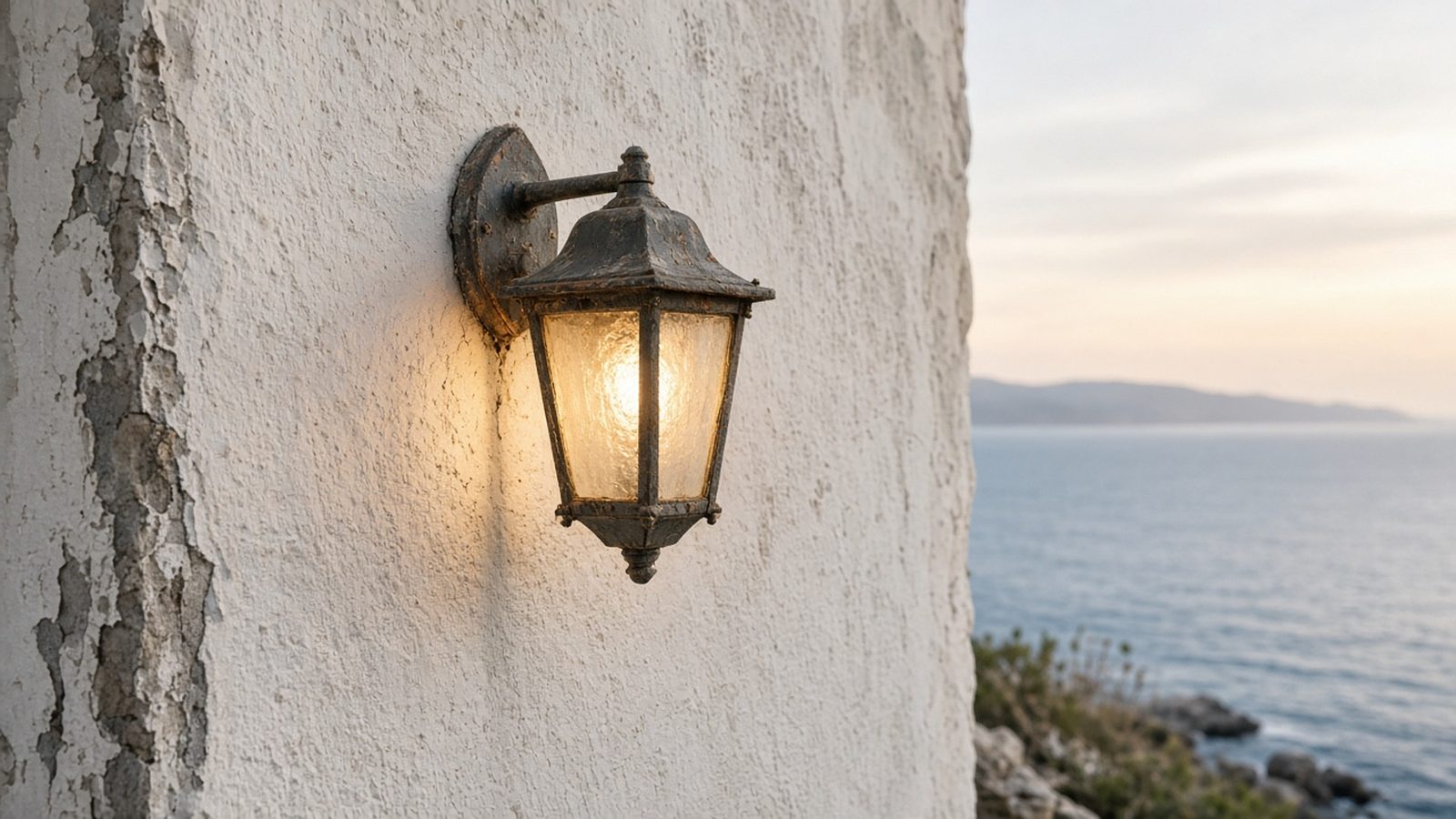
A seaside elevation does not need a second gate-lights catalogue. Architects and dealers already pick faces on cast aluminium gate lights and outdoor wall lights. What arrives on WhatsApp instead is a packing question: will this lot sit open to salt wind, under a porch, or both — and what must be named before cartons leave Premier Nagar. This note is that order checklist. It is not the materials deep dive in powder coat and antique finish, and it is not the black-versus-gold finish comparison for inland pillars. Those pages stay where wipe-versus-coat science and street-look choices live. What follows is how Yogendra and Dharmendra still walk a coastal brief before a trade lot is taped shut — pan-India supply from the Aligarh works, with the factory named as origin, not as a city-only pitch.
Key facts
- Coastal outdoor lantern India orders need an exposure line first — open sky, covered porch, spray-facing compound or sheltered court — not only a city name.
- A salt-air elevation order checklist locks cast aluminium (not iron) before colour talk; finish climate stays on the powder coat and antique note — no marine plating or IP numbers invented here.
- Name one finish family for every face the road photographs together; models stay on the gate and wall hubs.
- Door seating, drip loops and empty-versus-glazed packing belong on the quote before cartons leave Aligarh.
- Next step: Padma_Catalogue_2026.pdf or WhatsApp +91 70176 62533 with codes, exposure, finish, packing and pincode.
A worked coastal brief (composite, not a named client)
A dealer sends two pillar-head codes and four wall brackets for a white villa that faces the open road within a kilometre of the shore. The drawing looks clean. The first reply from the desk is not a price — it is five clarifying lines: which faces take full sky, which sit under a roof overhang, one finish family for everything the road photographs together, empty housing or glass-and-LED packing, and destination city with pincode. Until those lines exist, packing is guesswork. The models stay on the hubs; the climate wipe detail stays on the antique-finish note; this page only records the questions that stop a salt-air remake.
Six confirmations before the carton is closed
Use the list as a WhatsApp template. Skip a step and the site usually pays later — either in a finish that ages faster than expected, or in a door that never seated and filled with wet air.
-
Name the exposure, not only the city
“Chennai job” or “Goa villa” is not a climate brief. Say open pillar under full sky, covered porch, compound return that sees spray, or a sheltered courtyard. Salt wind and night dew behave differently on each. North Indian monsoon behaviour is a separate story on what a North Indian monsoon does to a gate light; coastal salt is the brief here.
-
Lock the body metal before the colour photograph
Permanent outdoor heads on white plaster do not forgive iron that stains once moisture gets past a coat. Cast aluminium is the metal this works argues for — the aluminium-versus-iron case is already written in aluminium vs iron outdoor lights. Finish talk without metal talk is a stall when the wall faces the sea.
-
Point at a finish family — then stop inventing marine claims
Matte black often reads quieter on open salt-facing plaster; antique wipe can still belong under a covered porch. How wipe versus powder coat ages under salt fog and grit belongs on powder coat and antique. Side-by-side black-versus-gold for inland gate pillars sits on matte black vs antique gold. This checklist only insists you name one family for the pair (and any wall faces in the same road glance) — and that you do not ask the desk to print a marine or plating claim on a wipe.
-
Treat the door and the wire path as part of the order
A cast body does not forgive a door left ajar for three wet seasons. Before install, check that the door seats on the full lip, that the latch is not bent from transit, and that any top wire entry has a drip loop so water does not follow the conductor into the bowl. Empty housing means your electrician finishes that weather path; glass-and-LED packing still needs a door that closes. “With glass” is not a substitute for inventing an ingress rating — this site does not publish IP numbers.
-
Decide packing before the lot leaves Aligarh
Empty cast housing versus complete glass-and-LED is a wholesale line, not an afterthought. The trade guide for that choice is empty housing vs glass+LED. Wholesale packing from the works is quoted from 10 pieces upward; smaller one-to-five piece picks follow retail list. Invoices stay in INR on an ex-works Aligarh basis, with GST and freight called out separately — see About and shipping.
-
Send sizes with the climate line
Open pillars still need a taped cap seat — use pillar size to lantern size. Wall faces still need a sensible centre mark — use wall lantern mounting height. Coastal weather does not shrink a lantern that overhangs the cap, and it does not forgive a glare height chosen from a phone crop alone.
What this page is not
It is not a hub for gate, wall, hanging or pole models — those stay on their category pages. It is not a finish science article; wipe, powder coat, salt fog and desert dust already live on the antique-finish note. It is not a monsoon drainage essay for inland North India. And it will not invent certificates, client names, prices or ingress ratings that are not already on the site. If a drawing needs a one-pager for the lantern itself, start from the architect spec sheet habit: metal, powder coat, antique wipe when that is the look, usual B22 holder language, real sizes — no fake marine plating.
Frequently asked questions
- What should trade confirm before packing a coastal elevation lantern order?
- Name the exposure (open sky, covered porch, spray-facing compound or sheltered court), lock cast aluminium as the body metal, name one finish family for everything the road sees together, check door seating and drip loops, decide empty housing versus glass-and-LED packing, and send sizes with the climate line. Do not invent marine or IP claims on the quote.
- Is cast aluminium required for a seaside villa outdoor lantern?
- Permanent outdoor heads on salt-facing plaster should use cast aluminium rather than iron that can stain once moisture gets past a coat. Finish talk without metal talk is a stall when the wall faces the sea — see aluminium vs iron outdoor lights.
- Does Padma publish marine plating or IP ratings for coastal lanterns?
- No. This site does not invent marine plating, ingress numbers or certificates that are not already published. Name a finish family and keep wipe-versus-coat climate detail on powder coat and antique — do not ask the desk to print a marine claim on a wipe.
- What belongs in the first WhatsApp for coastal outdoor lantern wholesale?
- Model code(s) from Padma_Catalogue_2026.pdf or the gate / wall hubs; exposure in one line; one finish family; empty versus glass-and-LED; quantity; destination city and pincode. Trade desk: +91 70176 62533.
How to open the coastal WhatsApp
Trade desk: +91 70176 62533 · email padmaenterprises55@gmail.com.
- Model code(s) from Padma_Catalogue_2026.pdf or the gate / wall hubs — or a clear pillar-cap photo with a tape on the seat.
- Exposure in one line: open sky, covered porch, spray-facing compound, or sheltered court.
- One finish family for everything the road sees together.
- Empty housing versus glass-and-LED, quantity, destination city and pincode.
Replies track the facts you send. The usual holder language on quotes is B22 unless the message names another. Whether a bulb rides in the carton follows the quote line, not a photograph. Domestic courier already reaches coastal metros and the towns our partners cover — ask for a firm delivery window with your pincode before you lock the lot.
“Write the exposure once. Then pack the lantern you actually ordered — not the marine fantasy in the tender footnote.”